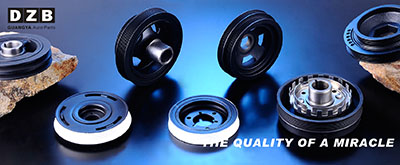
The pulleys on the engine include the crankshaft pulley, water pump pulley, generator pulley, compressor pulley, and tensioner pulley. These pulleys each serve different functions:
The crankshaft pulley is the power source that drives the operation of the belt by providing rotational drive.
The water pump pulley is driven by rotation to circulate the cooling water inside the engine, ensuring the normal operating temperature of the engine.
The generator pulley drives the generator to work by rotating, providing additional power support for the vehicle.
The compressor pulley is a key component of the air conditioning system, which drives the compressor to work by rotating, generating low-temperature cold to regulate the temperature inside the vehicle.
The function of the tensioning wheel is to ensure that the belt works under appropriate tension, ensuring the efficiency and reliability of the belt transmission.
The belt of a car engine, as a rubber product, will experience wear or aging over time and needs to be replaced regularly. It is generally recommended to inspect and replace the belt after driving the vehicle for approximately 60000 to 100000 kilometers to ensure the normal operation and safe driving of the engine. This is also a reflection of the manufacturer's requirements for belt performance and maintenance.
|